
Home / How it works
How it works
From fixing to connecting.
ABM NeuroMovement is a movement based approach to learning. It treats the brain as a system that organises itself, and gives it the conditions and information it needs to find new, easier ways to move, think and feel.
The approach
Movement is the language of the brain
Your brain is taking in a constant stream of information: sound, light, touch, the pull of gravity and its own long established habits of movement. When there is a lot going on, small but important signals get lost in the noise.
Picture a torch shone on your back on a busy street in daylight. You would not notice it. Shine the same torch on your back in a quiet, dark room and you feel it straight away. The torch has not changed. The background has.
An ABM practitioner works in the same way. They turn the noise down: slowing everything down, reducing effort and force, using light, connected touch, and keeping the room calm and unhurried. Against that quiet background, the brain can notice small differences in how the body moves and feels. Noticing a difference is where learning starts. The brain uses it to build a clearer map of the body, and from a clearer map, new and easier ways of moving, thinking and responding can emerge.
Connecting, not fixing
Rather than trying to correct what is seen as wrong, the practitioner connects with what is already there and working, however limited that may seem. The diagnosis is one part of the picture. It does not decide what is possible.
This is not about doing movements for the sake of it. A movement repeated on autopilot gives the brain very little to learn from. The same movement done slowly, with attention and real connection to how it feels, gives the brain new information it can use. When the nervous system is met with safety, respect and curiosity, rather than pressure, its capacity to learn wakes up.
“After her first intensive my daughter would lay happily on the floor when I placed her there. Her feeding and sleeping drastically improved, she started to babble, and she began to smile in response to my voice and touch.”Abi, mother of Annabelle, who has dystonic cerebral palsy
Background and evidence
Where the work comes from
ABM NeuroMovement was developed by Anat Baniel, who worked closely with Dr Moshe Feldenkrais. It builds on his work with decades of experience with children and adults, and on research into neuroplasticity, perception and motor learning.
A peer reviewed paper in Frontiers in Integrative Neuroscience (2025) sets out how the approach works with autistic children. Neuroplasticity pioneer Dr Michael Merzenich and Dr Norman Doidge, author of The Brain That Changes Itself, have both spoken about the method.
The 9 Essentials
The conditions in which the brain learns best
Developed by Anat Baniel from decades of work with children and adults, the 9 Essentials guide every lesson. They are also what a parent or carer can bring into everyday life, so that daily routines become chances for the brain to learn.
Anat Baniel explains the 9 Essentials and how they can change the way you interact with your child. Each essential below has its own short video too.
Movement with attention
When the brain pays attention to a movement, it forms new connections far faster than when the same movement is done automatically.
Slow
Slowing down lets the brain feel what it is doing. Fast movement runs on old habits. Slow movement gives the brain something new to notice.
Variation
Repetition grooves in what is already there. Variation, the same movement explored in many small ways, is what lets the brain find something new.
Subtlety
Reducing force and effort lets the brain feel finer differences. The less effort, the more the brain can sense.
Enthusiasm
Curiosity and enjoyment switch learning on. Celebrating small changes tells the brain they matter.
Flexible goals
Holding goals lightly keeps the brain open to the many routes that can lead to a skill, rather than forcing one.
The learning switch
The brain is either in learning mode or it is not. Lessons are designed to keep that switch on.
Imagination and dreams
Imagining, playing and dreaming open up new possibilities for movement and thinking.
Awareness
Noticing what we are doing as we do it turns ordinary moments into opportunities to learn.
In a lesson
What a lesson is like
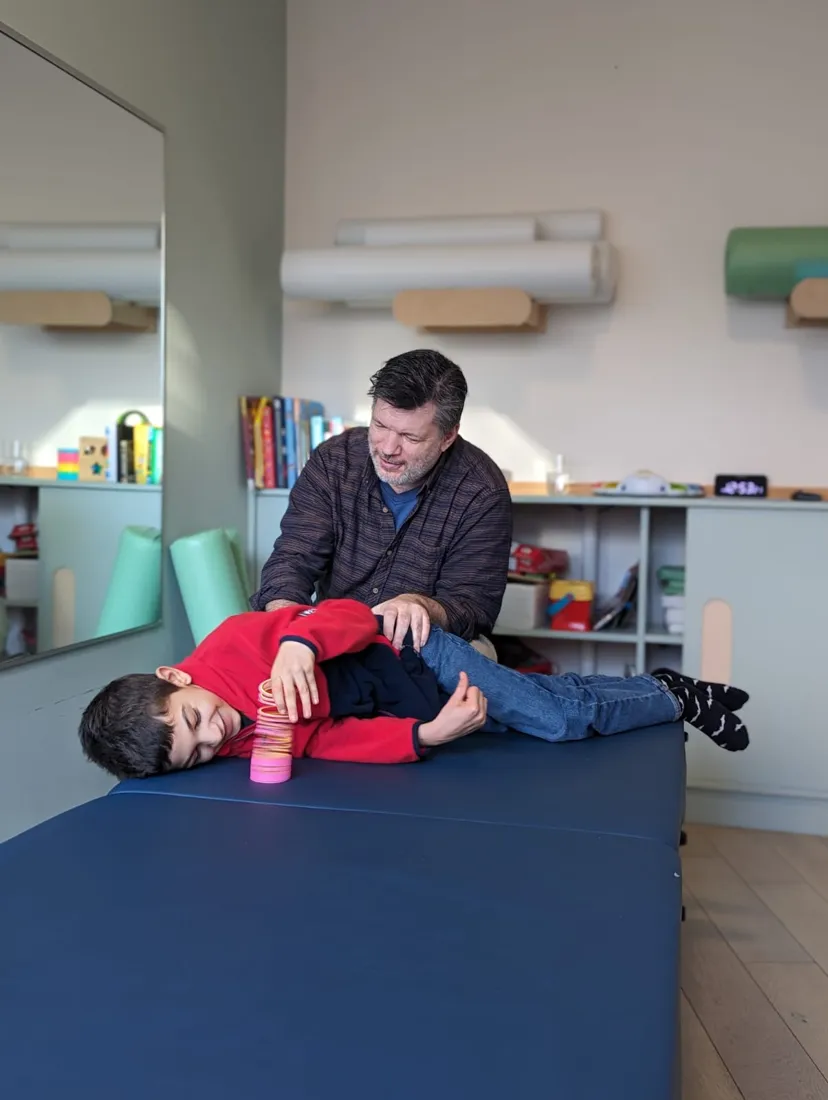
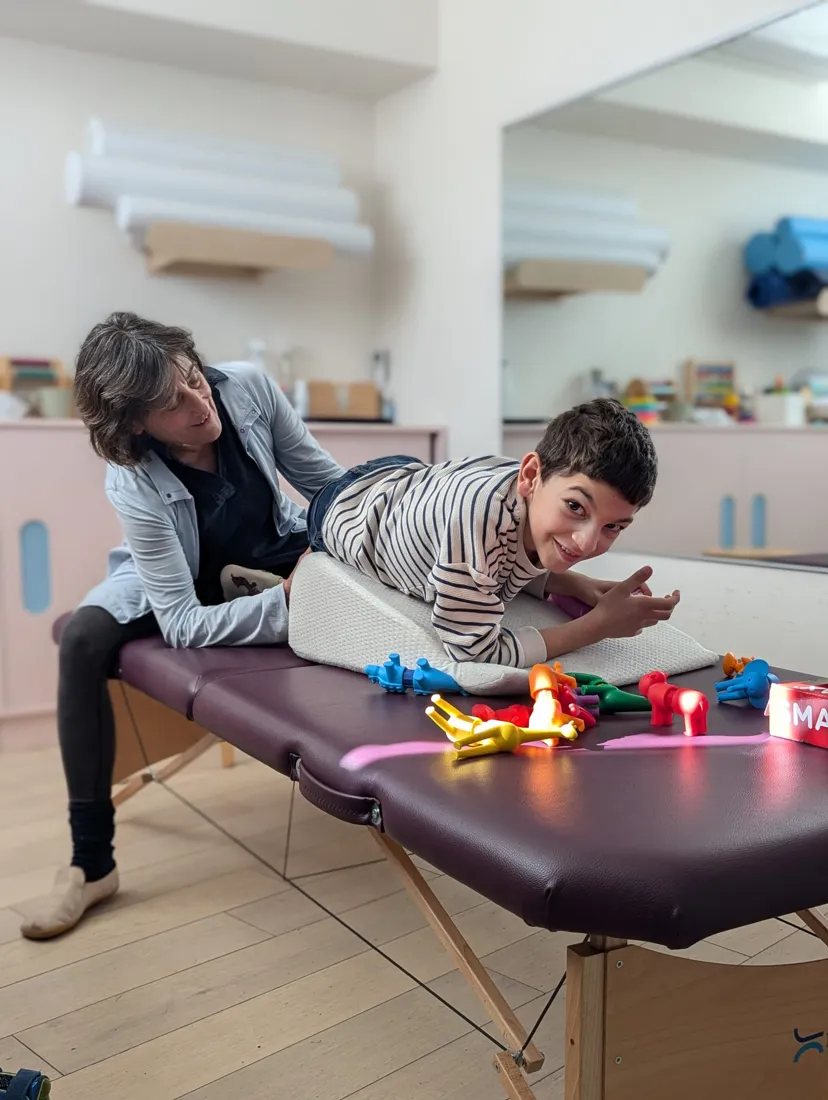
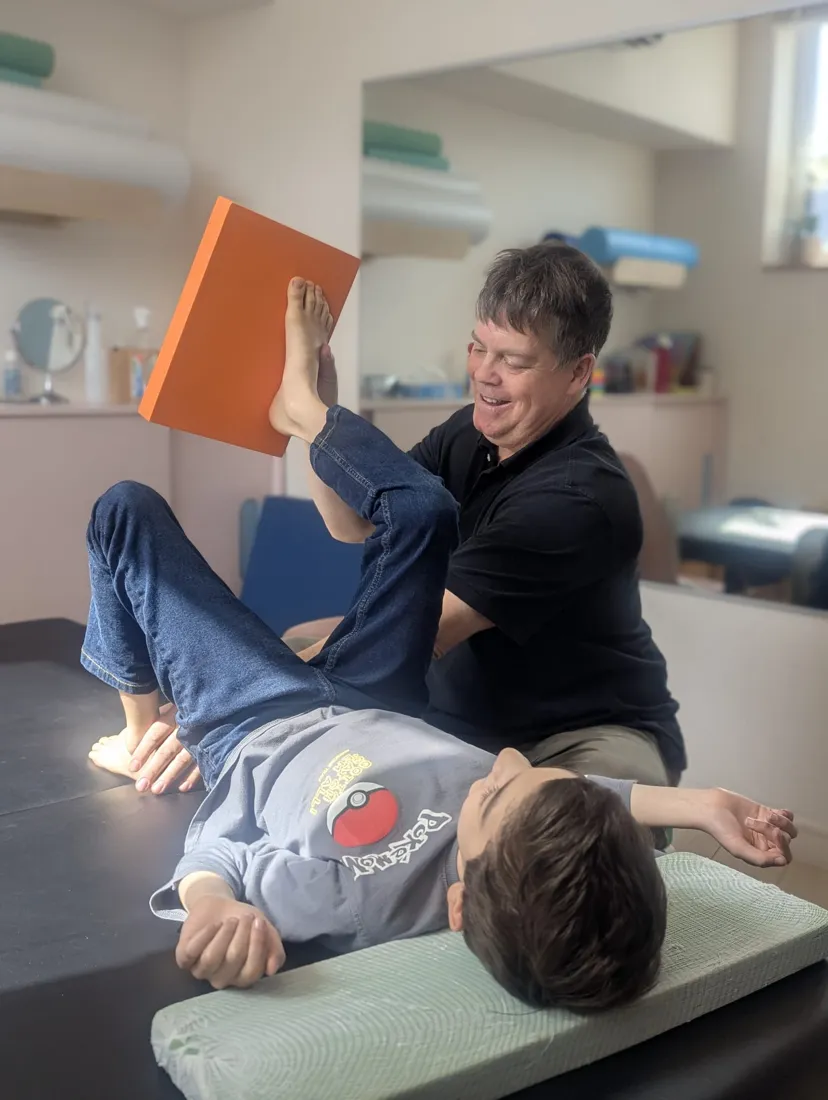
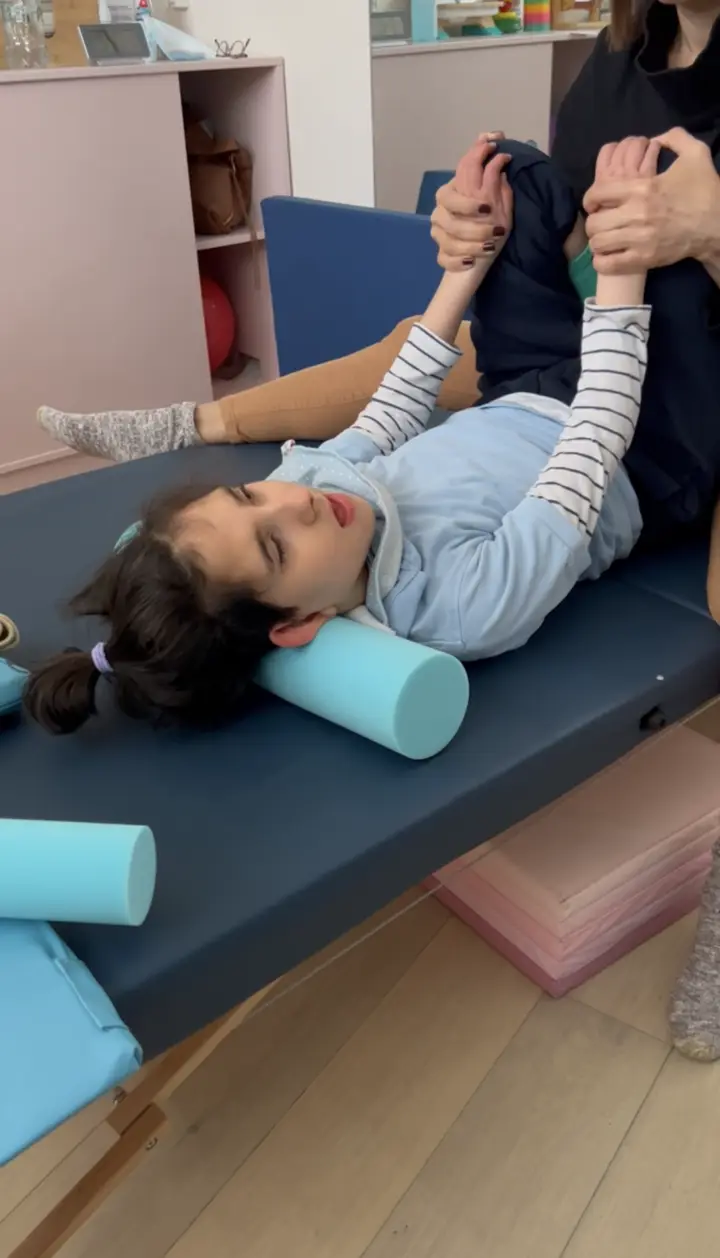
Lessons are one to one and last up to 45 minutes. Most take place on a low, padded table, though they can also happen sitting, standing or moving around the room. The person stays fully clothed.
The practitioner uses slow, gentle touch and small movements to give the brain new information. There is no fixed routine: each lesson follows the person on the day. Nothing is forced, and nobody is asked to do what they cannot yet do.
People may feel relaxed, alert or sleepy, and many are hungry or tired afterwards as the nervous system takes in what it has learned. We suggest comfortable clothes, water and snacks, and some fresh air and a change of scenery between lessons.
Parents are usually in the room, so they can see the quality of the interaction and take it into everyday life.
Intensives
Why we work in intensives
An intensive is a block of lessons over a few consecutive days, usually 6 to 10 lessons over three to five days, with two lessons a day and a break in between. This format was developed at Anat Baniel's centre in California.
Why intensives work
- The brain builds on each lesson. When lessons are close together, each one starts from where the last left off, rather than from scratch.
- Learning keeps going afterwards. Changes often continue to appear in the days and weeks after an intensive, as the brain takes in what it has learned.
- A clear picture of what is helping. With other demands paused for a few days, it is easier to see what is changing.
- Momentum over time. Families who return month by month, usually over three months or more, tend to see the deepest change.
During an intensive we usually recommend pausing other therapies, so the brain has space to take in what it is learning. Anything medical, and anything your medical team has prescribed, should always continue.
Getting started
Three steps to your first intensive
Tell us about you
The enquiry form takes about three minutes. It helps us prepare, so your call is about you rather than general questions.
A call with us
Around 20 minutes. We talk through what you have tried and what you are hoping for, and share fees and availability. If we do not think we can help, we will say so.
Your first intensive
Most people start with an intensive of 6 to 10 one to one lessons over a few days. Intensives start from £450 with our UK practitioners, and from £810 with our visiting international practitioners.
Next steps
Tell us about you, and we will be honest
If we do not think we can help, we will say so. If we do, we will explain what a first intensive involves and what it costs.